undefined
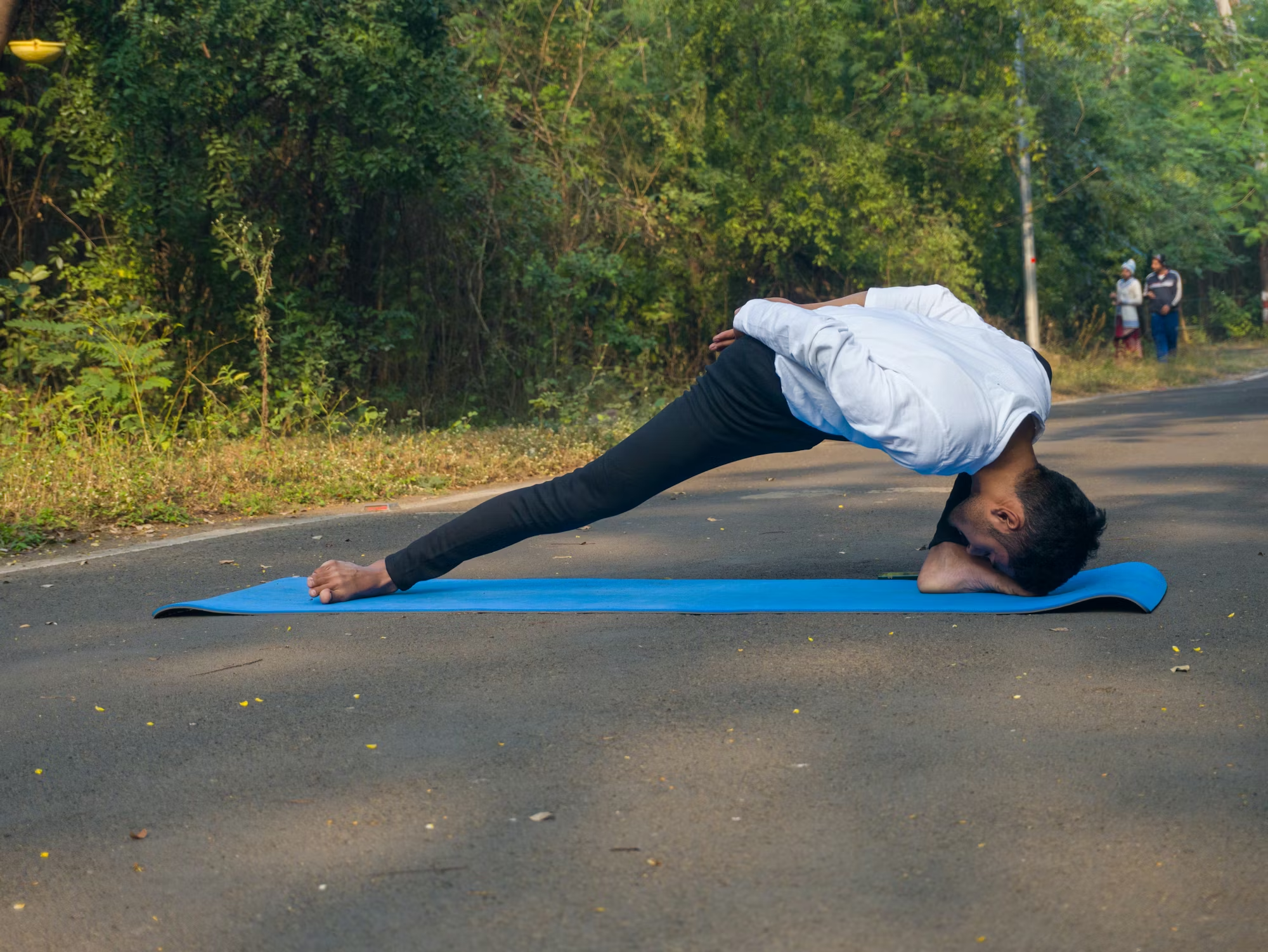
Yoga, once seen primarily as a spiritual practice, has transformed into a global fitness phenomenon. Whether practiced in the gym or at home, yoga offers a wide range of benefits for both the body and mind. The beauty of yoga lies in its versatility; it can be adapted to suit any fitness level, from beginners to seasoned athletes. By incorporating yoga into a regular fitness routine, individuals can enhance their strength, flexibility, endurance, and mental clarity. This article will explore how yoga can elevate a fitness journey, focusing on specific styles that target different aspects of physical and mental well-being.
undefined
Hatha Yoga is one of the most accessible styles of yoga, often recommended for beginners. It provides a gentle introduction to the fundamental principles of yoga, such as breath control (pranayama) and physical postures (asanas). Hatha classes are generally slower-paced, allowing practitioners to focus on proper alignment and technique. While not as intense as other styles, Hatha Yoga is highly effective for improving flexibility and building foundational strength. It is especially beneficial for those who want to increase body awareness and reduce tension without the physical strain of faster-paced yoga styles. Incorporating Hatha Yoga into a fitness routine can help create a balance between more intense physical exercise and restorative movement, enhancing both physical health and mental well-being.
undefined
Vinyasa Yoga is known for its fluid, dynamic movements that link breath with motion. Unlike Hatha Yoga, which holds postures for longer periods, Vinyasa flows from one pose to the next, making it an excellent choice for those looking for a more active and engaging workout. This style is perfect for individuals seeking a cardiovascular boost while also improving strength and flexibility. Each Vinyasa class typically includes sun salutations, which are a series of poses performed in a continuous flow, helping to warm up the body and increase circulation. The rhythmic movement paired with breathwork builds endurance, tones muscles, and enhances flexibility, making Vinyasa Yoga a fantastic complement to a fitness routine focused on cardiovascular health and muscular endurance. The beauty of Vinyasa is its ability to provide both physical and mental benefits, as practitioners are encouraged to stay mindful of their breath throughout the practice.
undefined
Ashtanga Yoga is a high-intensity, structured style of yoga that follows a set sequence of poses performed in a specific order. Each practice includes breath coordination, movement, and the practice of ‘drishti,’ or focused gaze, which helps improve concentration and mindfulness. The primary series of Ashtanga is designed to purify the body and mind, creating strength and flexibility through dynamic movements and deep stretches. Ashtanga is physically demanding, offering a full-body workout that builds muscle tone, increases stamina, and enhances flexibility. This style is ideal for those who enjoy a rigorous and disciplined practice, as it requires commitment and consistency. For individuals seeking to improve their overall physical strength and endurance, Ashtanga Yoga offers a powerful addition to any fitness routine.
undefined
Bikram Yoga, often referred to as Hot Yoga, is a practice performed in a room heated to around 105°F (40°C). The heat increases the flexibility of the muscles, allowing for deeper stretches and greater range of motion. The Bikram series consists of 26 poses and two breathing exercises, each performed twice in a 90-minute class. The heat helps to promote detoxification, as it encourages sweating and promotes circulation, while the poses themselves improve strength, flexibility, and balance. Bikram Yoga can be an intense practice, but it is ideal for those looking to push their physical boundaries. The combination of heat and movement challenges the body in a unique way, helping to build endurance, flexibility, and mental toughness. Those who enjoy a physically demanding workout with the added challenge of heat may find Bikram Yoga to be an exciting complement to their fitness regime.
undefined
Iyengar Yoga is a precise, alignment-focused style of yoga that emphasizes the correct positioning of the body in each pose. Developed by B.K.S. Iyengar, this style is known for its use of props, such as blocks, straps, and blankets, which help practitioners achieve proper alignment and deepen their stretches. Iyengar Yoga encourages practitioners to hold poses for longer periods, allowing for greater muscle engagement and deeper stretches. The emphasis on alignment and the use of props make Iyengar Yoga an excellent choice for individuals who are working through injuries or who want to ensure they are performing each pose safely and effectively. It is also ideal for those who want to refine their yoga practice and build strength through precise movements. Whether as a stand-alone practice or a complement to more intense workouts, Iyengar Yoga provides significant benefits in terms of both strength and flexibility, while also promoting mindfulness and injury prevention.
undefined
Kundalini Yoga is a unique and spiritual form of yoga that focuses on awakening the energy located at the base of the spine. Through a combination of dynamic movements, breathing techniques, chanting, and meditation, Kundalini Yoga aims to unlock and elevate the practitioner’s inner energy, promoting emotional healing and mental clarity. While not as physically intense as other yoga styles, Kundalini Yoga provides significant mental and emotional benefits. The rapid movements and breathwork encourage emotional release and help to clear mental blockages, while the meditative aspects foster a deep sense of inner peace and connection. For those looking to combine physical movement with spiritual growth, Kundalini Yoga is a powerful practice that can complement a fitness routine focused on overall well-being.
undefined
Yin Yoga is a slow-paced practice that focuses on holding poses for extended periods, typically between 3-5 minutes. Unlike more dynamic styles of yoga, Yin Yoga targets the deeper connective tissues, such as ligaments, tendons, and fascia, rather than just the muscles. By holding poses for longer periods, Yin Yoga encourages deep stretching and flexibility while also promoting relaxation and stress relief. This practice is particularly beneficial for individuals who are looking to improve joint mobility, recover from intense workouts, or simply relax and unwind. Yin Yoga can be a wonderful addition to a fitness routine, offering a restorative counterbalance to more vigorous exercise styles. By promoting relaxation and deep stretching, Yin Yoga helps to reduce tension in the body, enhance flexibility, and improve overall mobility.
undefined
Restorative Yoga is a deeply relaxing practice that uses props to fully support the body in gentle, restorative poses. This style of yoga focuses on relaxation, recovery, and stress relief, making it an excellent complement to a more intense workout routine. By holding poses for several minutes with the assistance of props, practitioners are able to fully relax, letting go of any tension or stress that may have built up in the body. Restorative Yoga is perfect for individuals who are looking to recharge and restore their energy after a physically demanding workout. It also helps to promote mental clarity and emotional well-being, making it an ideal practice for those who want to cultivate a sense of calm and relaxation. Whether used for recovery or as a regular part of a fitness routine, Restorative Yoga offers significant benefits for both body and mind.
undefined
Yoga Nidra, or yogic sleep, is a practice of guided relaxation that induces a deeply restorative state of consciousness. While the body rests, the mind remains alert, leading to a deep sense of relaxation that promotes mental clarity and emotional healing. During a Yoga Nidra session, practitioners are guided through a body scan, breath awareness, and visualization techniques to help release tension and calm the nervous system. This practice is particularly beneficial for those seeking to reduce stress, improve sleep quality, and promote overall well-being. Yoga Nidra is a great addition to any fitness routine, as it helps to balance the physical demands of exercise with deep mental and emotional restoration.